Looking To Sell or Let?
Get started with a free property valuation

Most buyers form an opinion about a property before they’ve opened the front door. Some do it before they’ve even booked a viewing, scrolling through listing photos on their phone at half past ten at night. How well your home is prepared for sale shapes everything that follows: the number of viewings you get, the offers that come in, and how long you spend on the market. It’s worth taking it seriously.
This guide covers the practical steps to take before your property goes live, whether you’re a few weeks out or still deciding whether to sell.
The instinct when preparing to sell is to reach straight for a list of jobs. Resist it, at least initially. Before you spend money or time on anything, walk through your home as if you’re seeing it for the first time. Better still, ask a friend, parent, sibling or neighbour to do it with you and tell you what they actually notice, not what they think you want to hear (the more honest – the better!).
What you’re looking for is different from what a surveyor looks for. You’re not finding defects, you’re asking what a buyer’s eye lands on first, and whether that first impression is working in your favour. A fresh coat of paint on a tired hallway will do more for the average buyer’s confidence than a new boiler they’ll never see.
Write down what you find. Then prioritise by impact, not by how much the job has been bothering you personally.
The front of your property is doing sales work before any viewing takes place. Buyers drive past before booking. They screenshot the listing photo. They arrive a few minutes early and sit outside. What they see sets the tone.
In Saltford and Keynsham, most properties have gardens, driveways, or at least a front path. These need attention. Cut back anything overgrown, weed the joints in paving, repaint a front door that’s looking tired, and replace any broken gates or wonky house numbers. These are small jobs with an outsized effect on how buyers feel as they walk in.
If your property is in a terrace or has a shared entrance, focus on what you can control: a clean doorstep, a working bell, a tidy letter box.
Clutter makes rooms read as smaller and makes it harder for buyers to see the property rather than your belongings. This isn’t about creating a show-home but about giving buyers enough visual space to imagine themselves there.
Be methodical about it. Work room by room. Clear worktops in the kitchen, reduce what’s on display in bathrooms, and thin out bookshelves and sideboards. If you’re staying in the property during the sale, hire a storage unit for a few months rather than shuffling things from room to room.
Pay particular attention to storage spaces. Buyers open them. A bulging airing cupboard or an overflowing under-stairs space tells a story about whether there’s enough room to live comfortably in the property.
You don’t need to renovate to sell. But there are certain things that, left unaddressed, will give buyers a reason to either walk away or negotiate hard. The list is usually shorter than sellers expect.
Focus on:
A pre-sale survey or a general builder’s look-around can be worth doing if you have any suspicion of a larger issue. Finding a problem yourself, and fixing it on your own terms, is considerably better than a buyer’s surveyor finding it and using it to renegotiate.
Fresh paint is one of the most cost-effective things you can do before selling. It makes a property feel clean and cared for. You don’t need to repaint every room and remove all of your personality, but unusual decorative choices are sometimes difficult to see past.
Neutral tones such as off-whites and warm greys work best in photographs and give buyers an easier time imagining their own furniture in the space. Avoid brilliant white if the light in the room is cool or limited; it tends to look clinical rather than fresh.
Your focus should be reducing the number of things a buyer has to mentally edit out when they’re trying to decide whether they want to live there.
Staging doesn’t have to mean hiring a professional company and replacing your furniture. For most sellers, it means making deliberate choices about how each room is presented.
A few principles that make a consistent difference:
If the property is empty or nearly so, professional staging is worth considering. Furnished rooms consistently sell faster than unfurnished ones, because buyers find it genuinely difficult to judge scale and layout from an empty space. We have recently worked with SJP Staging on some Pensford new build properties and would highly recommend their services. View their work here.
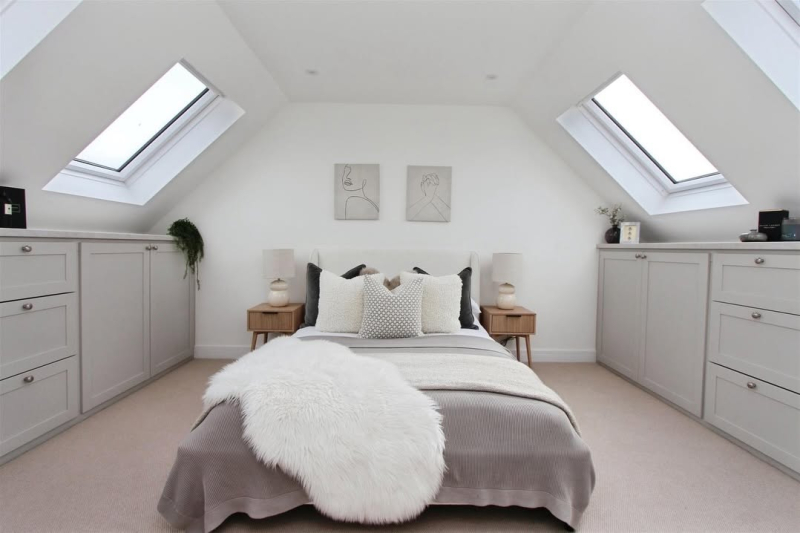
Almost every buyer finds their next home online before they find it in person. Your listing photos are doing the work of an open day, around the clock, for everyone who sees your property on the portals. Poor photography is one of the most common and most avoidable reasons a well-prepared property underperforms on the market.
A good agent will arrange professional photography as standard. If yours doesn’t, ask specifically. The difference between phone photos and a photographer who understands how to shoot interiors is not subtle; it’s the difference between a listing that gets clicks and one that gets scrolled past. Meet our photographer Scott here or check out our drone man (literally!) https://www.ukdroneman.com/.
Make sure the property is fully prepared before the photographer arrives. Beds made, worktops clear, bins out of shot, cars moved off the drive.
Preparing the physical property is only part of the job. Buyers, solicitors, and mortgage lenders will ask for documentation, and delays in producing it are one of the most common reasons sales slow down or fall through.
Before you go to market, locate or obtain:
Having these ready before you go to market means your solicitor can respond quickly when a buyer’s solicitor requests them, which can shave weeks off your transaction timeline. If there’s paperwork that you’re unsure exists or cannot immediately find, talk to your agent or solicitor before contacting the council. They can advise you on the best way forward and help you understand your options.
The temptation is to get on the market as quickly as possible. In most cases, a few extra weeks of preparation produces a better result than rushing. Buyers can tell when a property has been hastily prepared, and a poor first impression is hard to recover from once you’re live.
That said, preparation doesn’t need to be a months-long project. With a clear plan and a realistic budget, most properties can be properly prepared within four to eight weeks. Start with the high-impact, lower-cost work: decluttering, cleaning, minor repairs, and paint. Then decide what else genuinely warrants attention given your timeline and budget.
Your estate agent should be involved in this conversation before you spend anything significant. A good local agent knows what local buyers in Bristol and Bath are currently prioritising, and what’s unlikely to move the needle in the current market.
When you’re ready to take the next step, our team at Eveleighs is happy to walk through your property with you and give you an honest view of what’s worth doing before you go to market. You can arrange a free valuation or get in touch to talk it through first.
Yes. In England and Wales, you must have a valid Energy Performance Certificate in place before your property can be marketed for sale. EPCs last ten years, so if yours has expired you’ll need to commission a new one from an accredited assessor before your listing goes live.
For most properties, four to eight weeks is enough time to carry out the practical preparation without rushing. If you’re planning significant work such as redecoration or repairs, give yourself a little longer. The key is to have everything finished before the photographer arrives, not just before the first viewing.
It depends on the property and your budget. For occupied homes, thoughtful presentation, clearing clutter, adding fresh bedding and towels, and ensuring good lighting costs very little and makes a real difference to listing photos and viewings. Professional staging is most valuable for empty properties, where buyers often struggle to judge scale and layout.
Focus on anything a buyer is likely to notice or a surveyor is likely to flag: damp stains, cracked grout, dripping taps, doors that don’t close properly, and peeling paintwork. Structural or serious defects are worth addressing on your own terms rather than leaving them to be discovered during a buyer’s survey and used as leverage in renegotiation.
A full redecoration isn’t always necessary, but repainting rooms with bold or unusual colours, and freshening up tired hallways and main reception rooms, is generally worth doing. Neutral tones photograph well and make it easier for buyers to picture their own belongings in the space.
Get started with a free property valuation
Contact us, and we will be more than happy to help


If you're buying, selling, or letting property along the Bristol to Bath corridor, understanding both city markets is essential. Discove...


"*" indicates required fields
"*" indicates required fields